
LC3: A Guide to Best Practices for Scalable, Affordable, and Sustainable Low-Carbon Building

With the support of UNIDO, we are proud to announce the publication of the latest LC3 brochure:
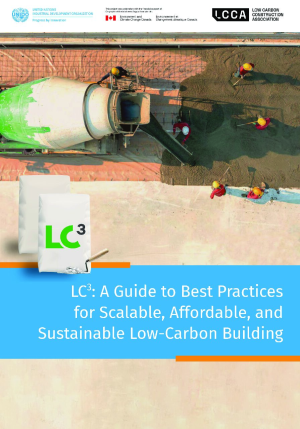
LC3 can lower CO₂ emissions by up to 40% compared to conventional Portland cement while maintaining comparable performance in concrete, both in fresh and hardened state. It offers a scalable and practical solution to decarbonize the cement sector, which accounts for around 7–8% of global emissions. This is critical, as cement remains essential and irreplaceable at scale to meet growing global construction demand, particularly in the Global South.
A key advantage of LC3 is its immediate applicability: it can be produced in existing plants with limited modifications and low investment, enabling rapid and large-scale deployment.
Lower clinker. Lower carbon. Immediate impact. At scale.
This report provides a clear and accessible overview of LC3, covering the full value chain — from raw material selection, characterization and calcination to cement production and concrete performance. It draws on extensive research and industrial experience to highlight best practices for reliable implementation. It also highlights how LC3 can leverage the use of local resources to reduce emissions while supporting industrial development, particularly in regions where construction demand is growing fastest.
This paper was developed under the Decarbonization of the cement and concrete sector in Thailand project activities, funded by Environment Climate Change Canada.